Media Reforms and Democratization in Emerging Democracies of Sub-Saharan Africa by Ufuoma Akpojivi
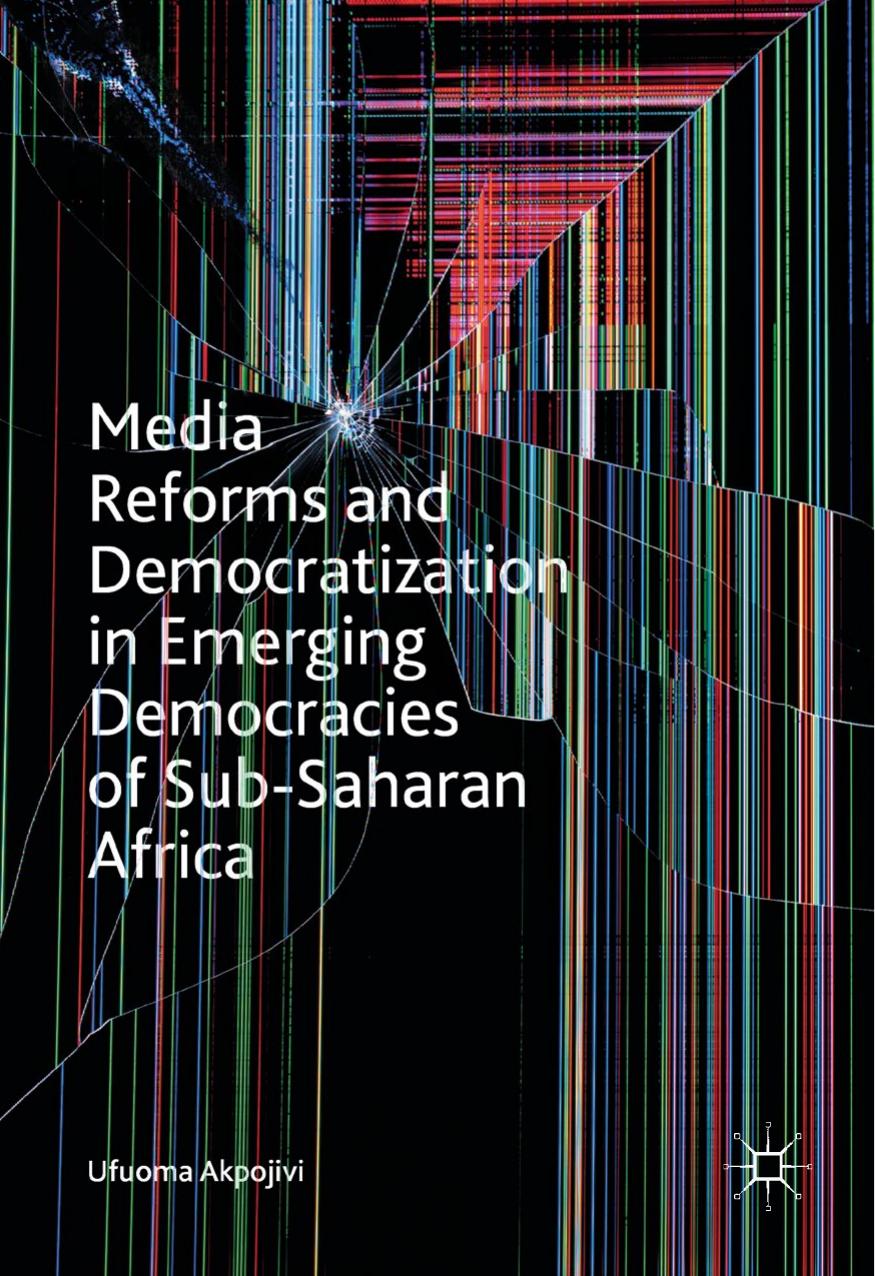
Author:Ufuoma Akpojivi
Language: eng
Format: epub, pdf
Publisher: Springer International Publishing, Cham
Universal Access to the Media
Nyamnjoh (2005) stated that access to information in most African countries is still a privilege, as the majority of Africans due to poverty are excluded from the information highway, and the further commodification and privatization of information and knowledge has made the reality of access to information a mirage. Nyamnjohâs assertion attests to the challenge of attaining universal access to the media which was encapsulated as a fundamental human right in the Universal Declaration of Human Rights of 1948. Although, universal access to the media is a major problem affecting both the developed and developing countries, it is more worrisome in developing African states such as Ghana because a modern and basic communication infrastructure is lacking.
Most often in the discussion of universal access to the media the focus is on the rights of the public to access information. However, it should be noted that there are two approaches to understanding universal access to the media: the right to access information and the right to participate in media discourse. The right to access the media will be incomplete without an understanding of the media content and citizens participation in the media discourse. Golding and Murdock (1986: 185) argue that âno one should be barred from the means to communicate publicly or acquire communication because of circumstances beyond their controlâ. This means that accessibly to information can only be judged to be complete when such access encourages participation to broaden societal discourse. The call for universal access to the media cannot be overemphasized as, according to a UNESCO 2007 report, the majority of Ghanaians reside in the rural areas with a literacy rate of just 49% (Akpojivi and Fosu 2016). This means that due to the infrastructural deficit these people might be excluded from accessing and participating in a media discourse. Consequently, the media policies in Ghana advocate for the liberalization of the airwaves to encourage multiplicity of channels in the rural areas (see Buckley et al. 2005; Alhassan 2005).
In addition, the National Media Policy (2000) went further by insisting that these channels or media of communication should use local languages in broadcasting so that the excluded public (those who do not understand or speak English) can be accommodated. This is in line with the ICT4AD policy that sees the establishment of community media as a mechanism for empowering marginalized rural communities because of its reach and participation . In summary, the National Telecommunication Policy (2005) insists that by 2010 âevery citizen and resident of the Republic of Ghana shall have available, high quality and affordable access to information and communication services, to help transform Ghana into a knowledge-based society and technology driven economyâ. Seven years beyond the deadline, this is still a dream yet to be realized as universal access to the media is still an abstract concept due to numerous challenges and conceptual issues. George Sarpong, former executive director of NMC, held that this idea of universal access within the reform processes is limited to telecommunication services and not the mass media (Interview 2010).
Download
Media Reforms and Democratization in Emerging Democracies of Sub-Saharan Africa by Ufuoma Akpojivi.pdf
This site does not store any files on its server. We only index and link to content provided by other sites. Please contact the content providers to delete copyright contents if any and email us, we'll remove relevant links or contents immediately.
| Anthropology | Archaeology |
| Philosophy | Politics & Government |
| Social Sciences | Sociology |
| Women's Studies |
The Secret History by Donna Tartt(19472)
The Social Justice Warrior Handbook by Lisa De Pasquale(12294)
Thirteen Reasons Why by Jay Asher(9122)
This Is How You Lose Her by Junot Diaz(7057)
Weapons of Math Destruction by Cathy O'Neil(6469)
Zero to One by Peter Thiel(5952)
Beartown by Fredrik Backman(5942)
The Myth of the Strong Leader by Archie Brown(5626)
The Fire Next Time by James Baldwin(5589)
How Democracies Die by Steven Levitsky & Daniel Ziblatt(5332)
Promise Me, Dad by Joe Biden(5230)
Stone's Rules by Roger Stone(5194)
A Higher Loyalty: Truth, Lies, and Leadership by James Comey(5090)
100 Deadly Skills by Clint Emerson(5023)
Rise and Kill First by Ronen Bergman(4906)
Secrecy World by Jake Bernstein(4889)
The David Icke Guide to the Global Conspiracy (and how to end it) by David Icke(4853)
The Doomsday Machine by Daniel Ellsberg(4624)
The Farm by Tom Rob Smith(4612)
